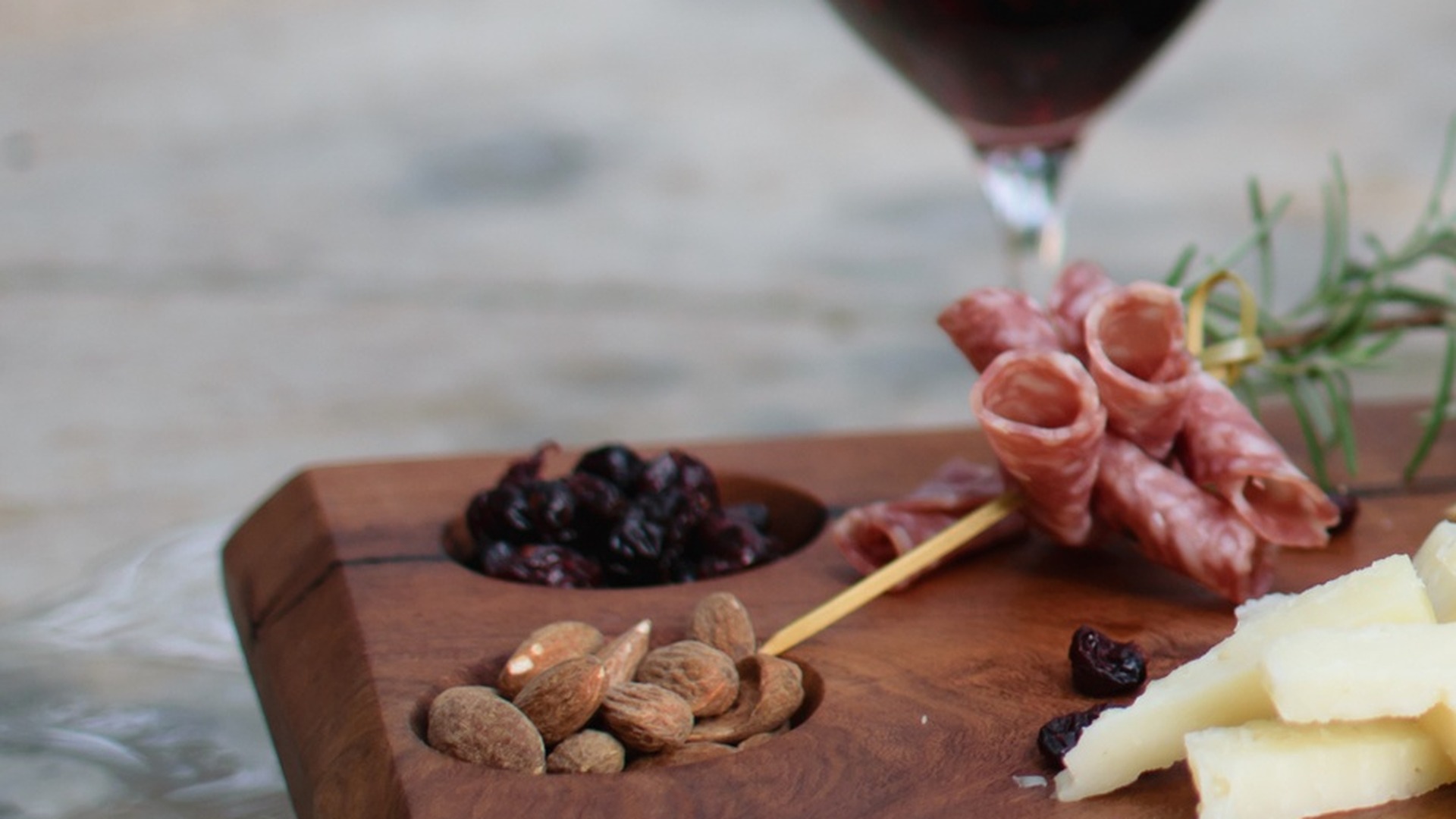
A bold red in the glass wants an aged cheese on the board. As cheese ages it loses moisture and grows richer and fattier, and that fat softens the wine’s grippy tannins so both taste smoother together.
At Capers & Co in Edmond, this is the pairing we teach when OKC metro hosts open Cabernet, Malbec, or Syrah for a cheese night. Tip #2 from our Company’s Coming pairing chapter keeps it simple: bold reds love aged cheeses.
Why bold reds need aged cheese
Young, delicate cheeses get steamrolled by a tannic red. Aged cheeses hold their own.
- Less moisture, more fat. Aging concentrates the cheese. The fat coats your mouth and calms tannins that would otherwise taste harsh.
- More intensity. A cheese aged about a year or longer has the flavor strength to stand next to a high-alcohol, high-tannin pour.
That is the same idea behind the classic Cabernet-and-aged-cheddar pairing. Match strength with strength, and the wine stops fighting the cheese.
If guests also want a softer bottle on the table, keep Tip #4: Sparkling Wines Love Creamy Cheeses nearby for the mild wedges. For how much cheese and meat to buy before you pour, open How Much Charcuterie per Guest.
Aged cheeses to reach for
Look for cheeses aged at least about a year when the bottle is a big red. Easy picks:
- Aged cheddar
- Gruyère
- Manchego
- Aged Gouda
- Parmigiano-Reggiano or another hard, grated-style cheese
Firm, nutty styles sit in the middle of many boards. Save the boldest reds for the hardest, longest-aged wedges on the tray.
Cabernet, Malbec, and Syrah with aged cheese
You do not need a cellar full of bottles. Match the red to cheeses that can take the tannin.
| Bold red | Aged cheeses that fit | Why it works |
|---|---|---|
| Cabernet Sauvignon | Aged cheddar, Parmigiano-style | Fat softens grippy tannins |
| Malbec | Aged Gouda, other hard aged styles | Rich cheese matches deep fruit and tannin |
| Syrah / Shiraz | Aged cheddar, Manchego, Gruyère | Intensity meets intensity |
Serve the cheese a little cool, not ice-cold: about 30 to 45 minutes out of the fridge is enough for flavor to open up. Pour the red at a cool room temperature, not warm from a sunny counter.
Build a Capers-style board around this tip
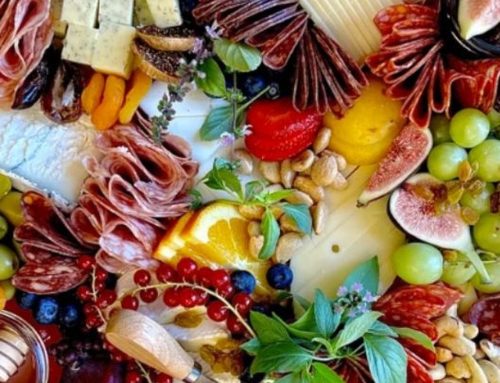
Make one aged cheese the anchor for the red, then fill in the rest the same way we build trays in Edmond.
- Place one hard or long-aged wedge (aged cheddar or aged Gouda) as the red-wine star.
- Add one firm nutty cheese and one milder cheese so guests who skip the bold pour still have something to eat.
- Fan a couple of cured meats nearby.
- Add dried figs or walnuts, a little honey or jam, and sturdy crackers or bread.
- Pour the bold red beside the aged wedges, not beside the softest cheese on the board.
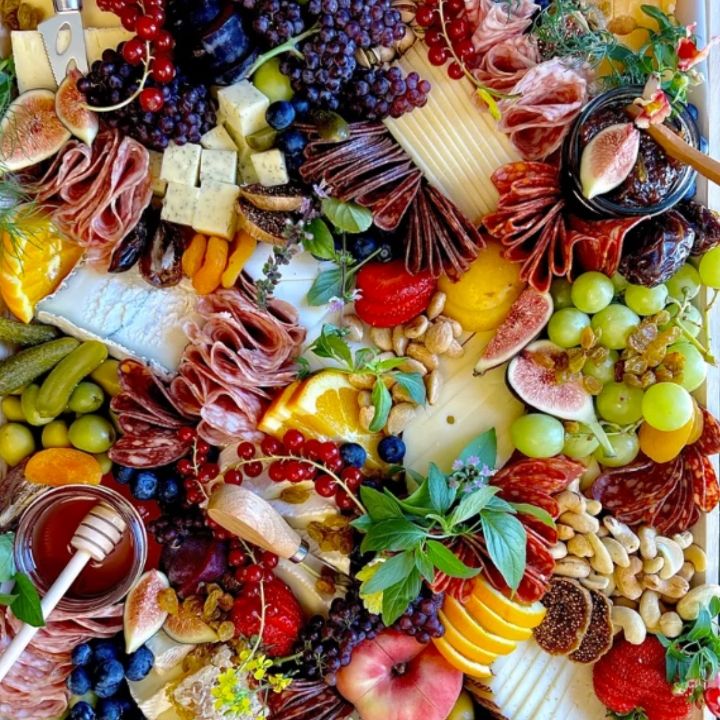
For the step-by-step board order, see Tip #1: Build a Better Charcuterie Board. For a long kraft-paper spread instead of a single board, read The Art of the Grazing Table.
If you would rather skip the shopping and pouring for an OKC metro gathering, order catering from Capers & Co and let us build the tray.
Skip this pairing mistake
Do not pour a big Cabernet next to a delicate, young cheese. The wine flattens the cheese and wastes both. Save your boldest reds for aged, nutty, hard cheeses that can hold their own. Soft and creamy belongs with bubbles, crisp whites, or a lighter red.
Frequently asked questions
Aged cheddar is the classic answer. Parmigiano-style and other hard, long-aged cheeses work the same way because their fat calms Cabernet’s tannins.
Yes. Steer guests toward the firmer, aged cheeses on the tray when the bottle is a big red. Soft wedges pair better with sparkling or a lighter wine. Start with catering if you want Capers & Co to build the tray for an OKC metro night in.
Pour both. Keep the bold red with the aged cheeses, and open sparkling for the creamy ones. See Tip #4.
Aim for about a year or more when the wine is tannic and bold. Younger cheeses are better with gentler bottles.